Showing posts with label Eyeshadow. Show all posts

5.17.2018

How to Apply Eyeshadow to the Lower Lashline


Defining my lower lashline is a technique I struggled with for a long time. From what I've been hearing- many of you share in that struggle. Because it was such a hard concept for me to understand, I think I developed a pretty good set of guidelines/common mistakes in my own journey. People do not enough, not too much

Build a Strong Foundation


The first step is one that so many people skip- and in my opinion it really shows. You must prime and set your primer well. And I do mean well- most people neglect primer or perfunctorily pat on a tiny amount. Generously prime and set thoroughly with a full layer of translucent powder or skintone shadow. If you don't apply primer, the soft and crepey/lined skin under your lashline will have a snowball's chance in hell of "grabbing" onto shadow and holding it in place. When people tell me they look sick or dead with lower lashline shadow, they usually are not taking the time to complete this step.

I use maybe 25% less primer than I use on the top lid, to cover the lower lashline, but it's by no means a tiny amount. I like to dot it all along the lower lashline with a Q tip and use my pinky finger to blend out. Primer should cover the area where eyeshadow will go and then some so don't be afraid to bring it down further than you think. If you powder your undereyes/foundation/concealer, prime before your powder step. I find applying eye primer on top of powder can lead to clumping.

Setting your eye primer is also a non negotiable step- eye primer itself can range from ultra creamy to a stiff waxy consistency, but if you go directly on "damp" primer with colored powder, you're going to have a streaky bad time. Setting with either translucent face powder or with a skintone-color shadow will not hinder the grippiness of your base, but it will allow for a smooth blending surface for any colors you apply on top.


Use transition shades


Imagine this, but shaped like the bottom of an eye not a perfect semicircle


Are transition shades "high maintenance?" Sure, but a lot of makeup techniques are high maintenance. The trick to good makeup is to make the end result appear effortless, but this requires far more work than meets the eye.

Transition shades are essential if, like me, you do not have a very 3D eye shape. Whether your eyes are very round, hooded, or flat, you might find yourself craving extra dimension and dynamism. Transition shades can help you with that by carving out more bone structure to make your eye makeup look defined, intentional, and interesting. Tangentially, when you are reading the makeup routines of models and celebrities remember that they have been selected as the top 1% of genetically gifted naturally beautiful and interesting looking people. What they can do with one color on their exceptionally sculpted and defined eyes...might take a bit more time and product for a normie.

This goes for the bottom lashline too. I always use at least 3 separate tones for my lower lashline eyeshadow. This enables me to create a softly blended, smoky appearance with very little work or actual blending. This is a simple technique but hard to put into words. Hopefully the following graphic expresses what I'm getting at:


Apply lighter colors first, and add darker colors
overlapping but not covering all of the last shade

Whatever you do, do not "stack" colors on top of each other- this will turn into one smudged line of a single color, awkward- use colors so that separate "bands of color" appear consecutively- you can layer, but make sure each layer doesn't obscure the last one completely. Always go from light to dark- if you try to apply the darkest shadow first and then blend out with a softer color, you are going to experience more muddiness and smudging. Pros can do the "blend out a dark line" well because- they're pros. Amateurs should use techniques and methods that create less work, not more. And smudging out a dark line that you've placed on bare skin is hard mode, make no mistake.

Remember that there is no single "holy grail" transition shade- it's dependent both on your skin tone and on the specific eye look you are doing. When I do a smoky green look, I use a pale nude, a bright yellow, a mustard yellow, and an acid green as my transition shades before I start going in with darker green. When I do a blue look, I'll use white, a pale gray, a darker gray, a bright blue...and then go in with navy. If in doubt, go monochrome. Do not slap on a brown crease before you do a colorful lid...just because. Think in terms of a color wheel and work within color families to begin. Once your understanding of color and shade has deepened, you can start playing with contrasts.


Apply More Than You Think


Most beauty mistakes/ruts are a result of making erroneous assumptions. People tell me every day "I can't wear lower lashline shadow, it doesn't work on me," or "I can't wear red lipstick ever," and I can tell not only from their pictures that it's untrue, but also because the more definitive/certain a statement is, the likelier it's unfounded. A huge mistake I was making for years is that I didn't apply enough eyeshadow to create definition. *Dwight Schrute voice* What? More shadow to appear less raccoony? Yes, it's true. If you wimp out and apply a thin line of eyeshadow, you might as well not even put anything there. Halfhearted attempts, borne out of a fear of adding too much depth or shadow, will always look wishy washy, unflattering, and unintentional.

Applying your colors lightest to darkest not only gives a beautiful smoky gradient, it also will unlock more confidence. It's really intimidating to go in on a bare eye with a big ol ring of black shadow. It's not that intimidating to apply a large halo of flesh tone, then go in with a slightly smaller ring of medium brown, etc etc. This is not only a good technique to create a speific effect, it will actually give you better muscle memory and understanding of just how low you can go (hint: it's always lower than you think.) Sometimes people will send me their makeup photos on IG or reddit and request constructive criticism- I have never seen someone who brings their shadow too low or has too much drama on a lower lashline. I always see a tentative little crisp line directly under the lashes, and it's an easy fix...just use way more shadow than you feel confident using. 

Here are some examples of old looks (left) where I hadn't quite mastered the lower lashline...side by side with looks that show a deeper understanding of shadow technique (right.) Please note the old looks appear less dramatic and that is due to the quantity of shadow on lower lashline. They were not intentionally soft/low contrast, the intention was to create a smoky effect, and I failed. The current examples represent what I intended to do all along. There is still a way to do soft makeup, intentionally, and some examples can be found later in the post.


As Above, So Below


The trend of a colorful lower lashline (POP of color) is one of those microtrends that I see as being less successful and/or interesting. It works when a great MUA does it, and sometimes it works on a normie like us. Maybe it's just my age showing, but it makes me think of my early high school years. My rule is to echo whatever pattern/placement from your upper lid on the lower lashline. If you're doing a halo eye (dark outer corner, bright middle portion) then the same pattern should be mirrored on your lower lashline. If you're doing a gradient smoky eye (light on the inside, gradually darkening as you go out) then same thing applies.

Here are some examples illustrating the principle- if your overall look is soft, you do not always need a smoky lower lashline! Keep things similar in hue and in density/drama. I also broke the rule I explained above in my first "sunset" look with a slightly different color on the lower lashline but I still used familiar transition shades, and kept the finish and saturation level similar. Play around to see what works with your own features. The point is not that you must have a rigidly perfection reflection of your upper lid, but that you should tie in "themes" like colors, finish, placement, to maintain continuity.


Use Multiple Tools


Use multiple tools, and smaller brushes in general- if you try to use one single brush to apply all your lower lashline tones, you'll end up with a muddy ring, regardless of how many colors you use. I absolutely suggest some of the brushes I discuss here, especially the final three. Large blending brushes have no place on the undereye- they can drag color too low, or else blend too thoroughly and destroy your careful placements.

FINISH HIM


If you've followed this process and still feel like it looks a bit wishy washy or not defined enough- you may choose to stamp a very thin line of waterproof pencil or gel liner along the lower lashline. Because you should already have a near-black/smoky shade in that placement as well, the liner will add weight without looking unblended (do not start blending this- you'll muddy everything up.) Waterproof is pretty essential for the lower lashline I've found- on the upper lid, you can get away with a normal product, but the lower lid is prone to smudging, bleeding, and fading. If you're going to use liner at all, make sure it can go the distance.

As for the waterline, you can leave it bare, apply a nude shade, or with a smoky look, apply a black liner. It's up to you. I've included examples above of all 3. You'll need to experiment with various looks to see what each requires. A filled-in waterline can add a touch of crisp refinement and weight, or it can throw off a delicate look.

The final step is to absolutely load up with lower lashline mascara- although this can look spidery or clunky with no eyeshadow, it adds a beautiful drama and final smoky touch to a lower lashline. I'm always wearing an unholy amount of mascara when I'm complimented on my lower lashes- they're nothing special to begin with, but in this situation you can be liberal with application without an unseemly effect.

Closing Thoughts


Most of my readers enjoy ridiculously long-winded advice (YA CAME TO THE RIGHT PLACE) but if you don't, here's a TL;DR:


  1. Use a lot of primer
  2. Use at least 3 colors in distinct bands
  3. You're not applying enough eyeshadow
  4. Mirror top lid with bottom lid
  5. Use small brushes
  6. Don't forget lashes and possibly liner if the look is heavy enough
Do all eyeshadow looks require lower lashline work? No. But many do. It's up to you to find the right balance with a particular look- and even if you think you don't need lower lashline shadow, you can always add some at the end of the day to see how your face would have looked had you chosen to add it. You should grow your inner catalog of reliable looks, so you gain an instinct for which placements are appropriate in what scenarios! 

A look that's deliberately missing lower lashline shadow


Happy eyeshadowing- if you're not already following me on Instagram, you can find me @faceonomics! Let me know if there are any other technique/general principle posts you'd like to see.

3.09.2017

Resisting Eyeshadow Palette Hype

When I was first introduced to makeup around the age of 11 or 12, high end and midrange brands did not offer a ton of palettes, and the ones that were around were not the cornerstones of those brands. I got my first of the 2010s-hyped eyeshadow palettes my second year of college, the original Naked Palette from Urban Decay, and I used that bad boy every day for nearly 4 years. It was like my eyes (ha) had been opened to this whole new world of multiple eye looks and layering different shades in the same color family. The Naked palette was so popular because of its ease of use (all the shades were rather blendable and beginner-friendly) and its ability to flatter a fairly large range of skintones. Of course, there are many people who don't enjoy the Naked palette, but it definitely started what I think of as the modern-day Eyeshadow Palette with a capital E.P.

The Allure


Eyeshadow palettes are appealing for several reasons. First, they offer thrilling variety in a small package- usually the price tag is "reasonable" in midrange makeup terms, between $40 and $100, for multiple shades. People love to break down the price per oz for these palettes to show how much less expensive it is to buy one set of 10 shadows than to buy those same 10 shades individually at market price. A good deal (or the impression of one) is seductive to newbies and experienced makeup lovers alike.

Second, eyeshadow palettes are generally speaking very visually appealing. They are almost always organized around a central theme, and designed and laid out in a way that sparks ideas for creative combinations and is just overall lovely to look at. If you've ever heard of the somewhat nastily-named Cheerleader Effect, where a group of girls (or guys!) looks more attractive as a whole because they are grouped together, than they look individually, then you can start to understand why eyeshadow palettes seem to be so pretty on first glance. Pretty things look alright by themselves, but they look gorgeous when paired with 9 other pretty things. There's a "greater than the sum of its parts" thing at play here and it yields a love at first sight feeling which can wear off once you buy the palette and take it home.

Third, eyeshadow palettes do play into the collector's mentality that a lot of makeup users start to take on after a few months or years involved in the hobby. There's this idea that if you own all the hot eyeshadow palettes, you are in good company of makeup lovers who have it all. We can't deny the temptation and tendency for people to desire a sense of belonging to a community, especially when the members of that community promote their image and personal brand as something worth emulating.

The Nefariousness


Because makeup companies only really have to hook you on one special awesome shade per palette to potentially get you to purchase the whole thing, they have 10 opportunities to catch 10 unique customers, all who will be paying $50 for 10 eyeshadows, a "good deal" by all accounts. But those customers, if they weren't presented with the 10 shadow palette, would only be "worth" the $10 they would have paid for a single shadow in that one appealing color. That's why you'll often see a brand offer such a good price per oz with their palettes...it costs them basically nothing to produce the colored dust that goes into a palette, and it makes you much more likely to spend more money for the variety and "value" that you perceive as a customer.

It's tempting to go for "good deals" because everyone likes to feel like they're getting something for nothing. In a palette, you're sold the idea that you're paying for a few key shades and getting the other ones for free! But as economists like to smugly say (myself very smugly included): "There's no such thing as a free lunch." When you get something, you are giving up something in return, whether you're aware of it or not. In the case of buying a shadow palette, you are paying the company money you could have otherwise spent on...food, rent, savings, or another makeup item. You might be fine what you pay for it, but you aren't getting away with murder by paying a price that you perceive as a steal.

Sometimes the price you pay isn't represented by only the dollar outlay on the item. Sometimes the price is a certain amount of psychological burden. Many people who own too much makeup express feelings of being overwhelmed or wasteful. While everyone's threshold for consumption varies, if you personally are negatively affected by clutter, then all things considered, it's not a good thing to increase your consumption.

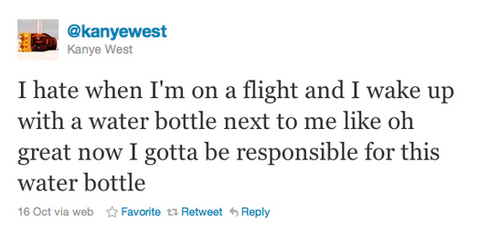
Because of this reasoning, I do not consider "free items" or free shades to be truly free. If someone were to offer me a sample in a mall, and I had no interest in it, what could be gained by taking it? Nothing. In the eternal words of Kanye West:

via buzzfeed.com

When to Buy a Palette


All things considered, why would you buy one? There are actually many instances where I think an eyeshadow palette can be a sensible and useful purchase. I'll show an example and explain my reasoning behind an actual palette purchase I made in real life...and an example where I was able to talk myself out of the palette purchase as it didn't make sense for me.

Pictured below is Lime Crime's Venus Palette, which I ended up purchasing after going through the thought process I'll outline.

via limecrime.com


I got this palette discounted and brand-new, which put the price at $22.50 for the whole thing.

The first step is to abandon the lies you tell yourself- that you will use that greige in the palette when all you like to wear is warm browns, that you need the champagne highlight shade when you already have 6 or 7 of them. Whatever shades are useless to you- they are automatically eliminated from the "value" of the palette. Don't attribute fake value to things that have none to you.

Right off the bat, I eliminated the "value" for Aura, Shell, and Muse. Aura looks exactly like every other pale champagney gold shadow out there- I own several. I wouldn't be getting any incremental extra eye possibilities/looks out of this shade. Muse is a near-perfect dupe for MUFE Morello Cherry which I already own and love. Since it overlaps almost entirely with the red matte I own, I can't use it for any new looks either. As for Shell, it's the pale pinky gold shade that I know from experience looks very bad on my skin tone and eye shape. While I technically liked and could use the first two shades, in the context of my existing collection, they aren't extremely useful or necessary for me. I would never purchase those colors if I found them in single form, since I already own them. For the last shade, I wouldn't buy it or use it period, even once I got the palette. It's not a repeat of something I own, because I hate the color.


8 shadows total - 3 useless shadows = 5 valuable shadows

Next, let's look at the shades which some might consider "bonus" value that aren't really what attracted me to the palette- here that would be the shade Venus, a satiny raspberry pink that's not really my style, but isn't abhorrent to me. It's not similar to anything I own. I'm going to count it as a half a shadow in terms of its value. That puts us at 4.5 potentially valuable shadows.

At this point let's take the base price and see if the price tag is worth the 4.5 shadows I'm getting (remember the 3 shadows I won't use do not count toward the perceived or actual value of the palette, I will not be calculating $/g)

$22.50 ÷ 4.5 shadows = $5.00 per useful shadow

At this point I have to decide if each of the shadows in the palette are worth a $5.00 price tag. For me, these shadows definitely qualified as "worth it." However, if I had had to pay the full price of $34.00 here's that calculation:

$34.00 ÷ 4.5 shadows = $7.50 per useful shadow

And yep that's still worth it to me. I was in the market for a rusty orangered shade, a very dark burnt brown, a violet-gray matte, and a medium bright coral matte. It just so happens that this palette is almost exactly what I wanted, and the price for these unique shades, which can be found as singles but at much higher price tags, is definitely worth it in this case.

What this calculation allowed me to do is see what I want and what I don't want from within a purchase, in order to rationalize and justify the true value and not be disappointed once I brought the product home. In addition, I depot all my eyeshadows and use them in travel palettes, which means I don't acquire baggage from unused/useless shadows. I throw them away or put them in storage. That option isn't available to everyone and should be factored into your calculations as those shades will take up space in your collection and lead to clutter and negative emotions in some cases.

When Not to Buy a Palette


This exercise isn't just a way for you to excuse buying eyeshadow- it's a tool to decide what's right for your collection and what's wrong. Here it is repeated for a palette which I ended up passing on.

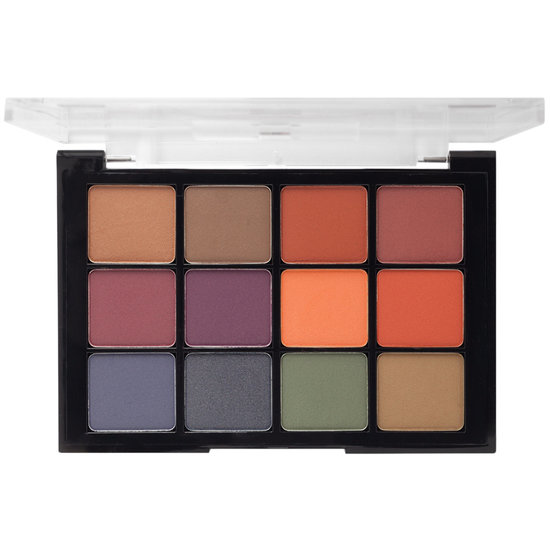
Here is a picture of the Viseart Dark Matte Palette, which costs a whopping $80.00 and comes with a fabulous reputation for blendability and pigmentation.

via beautylish.com


For a while, I was totally convinced I would get this palette. All of my muted, matte, blendable dreams come true- right? I read nothing but rave reviews about the versatility and the quality of all the colors, which should mean that it offered 12 valuable, useful shadows! Well, you know enough about me to know that I'm just leading you on. I didn't buy this palette.

If I could use every single shadow in this palette, the breakdown would be:


$80.00 ÷ 12 shadows = $6.66 per useful shadow

I always hear people gushing over the price per shadow in the Viseart palettes- what a steal for such a high-end product. However, I wouldn't use all 12 of these shadows. First off, I do not wear blue eyeshadow- ever. I don't own a single other blue or blue-adjacent eyeshadow and it's not something I currently need in my collection. That eliminates the 2 blue matte shades in the lower left corner. 

12 shadows total - 2 useless shadows = 10 valuable shadows

Then we have the 3 brown/true-neutral shades in this palette. They are all slightly different in undertone but would all qualify as neutral medium brown mattes. I own 4-5 of those types of shades in my collection already. There's a chance that all of these browns would be great on my skintone, but why bother finding out? I already have so many for the purpose that I'd use these for. I can eliminate all of these- and most eyeshadow lovers with any semblance of a collection could do so as well. Good neutral shades are a dime a dozen, and it's odd to me that the 3 in this palette are so similar to each other. 

10 shadows - 3 more useless shadows = 7 valuable shadows

Now we're down to the meat of the palette- 7 shadows that I might use, that are either going to be unique or distinctly superior when compare to what I already own. What I am really eyeing here is the 2 darker orange shades and the lighter purple shade. I have dupes that I love using for the lighter orange and for the darker purple and red. Finally, there's the one sage green matte shade unaccounted for. I love the way it looks- it seems gorgeously pigmented and blendable. I definitely want something like it, but I hadn't even thought to look for it before I saw this palette, which means it's not a huge priority clearly. We'll count it as a half-useful shadow. I'd use it if I had it but I don't think I'd go out and search for a single right this minute. I also have a lighter khaki green matte that stands in for it when I do require a green matte.

7 shadows - 3.5 dupeable shadows = 3.5 valuable shadows

Our ultimate calculation, once I take out all the fluff and the lying to myself about what I'll use becomes this:

$80.00 ÷ 3.5 valuable shadows = $22.86 per shadow

If these shades were so incredibly unique that I couldn't find them anywhere else, I would consider still buying this palette for just these 3 shades. However, at nearly $23 a pop, I can find similar shades within even the most expensive single shadow lines (NARS, MUFE, etc) and so there's no reason for me to pay and acquire all the extra baggage of those useless-to-me shadows anyway. Add that to the fact that the Viseart palettes seem difficult to depot (they are made of plastic not cardboard) and I'm unlikely to want to keep this palette in my collection because the useful shades will be "crowded out" by all the useless ones.

Packaging and its Impact


There is an issue I did not factor into my calculations above because it's insignificant to me- packaging. I know that there are people out there who love pretty packaging, and I don't hold that against them. If you fall in that category, I would say you should come up with a dollar amount for how much good/attractive packaging is worth to you. Are you willing to pay an extra $5.00 per palette just for a beautiful layout and exterior? An extra $30.00? Where is the cutoff for you? Everyone likes pretty things, but you should figure out, within your budget and lifestyle, how much packaging is worth to you in terms of cold hard cash.


Formula Preferences


Because there are so many textures and variations within the category of eyeshadows (further segmented into finish- matte, shimmery, satin) there is a large spread of what people consider good formula and bad formula eyeshadow. My preferences aren't the same as everyone's, and the point here is to figure out what textures work best for your skin type and eye shape, and forget the rest.

A good way to stop yourself from making a rushed palette purchase is to first go test the formula out in-person. No matter how appealing the colors may be on a computer screen, if the shadows themselves are too densely pigmented/not pigmented enough/chalky/streaky/too glittery, the colors won't do you any good. 

When you buy a shadow palette, you are buying 10-15 shadows produced and approved by the same chemistry and marketing teams. That means that if the people on those teams have a different taste than you, or they consider a certain type of formula good that you hate, you will not only hate a few of the shadows in a palette, you may possibly detest every single one of them. 

I really love Urban Decay's shimmer formula. I find it dense, rich, and superbly long-wearing on my eyes. However, I hate their microglitter formula. It's the shimmer formula with chunky, horrible flakes of glitter thrown in for no good reason. I like their satin formula fairly well, but I don't really enjoy their mattes. In any given Urban Decay palette, I will likely find some of each of those 4 finishes. If I only really like 2 of the finishes that Urban Decay makes, I'm already compromising on my preferences just by allowing the company to bundle up multiple shadows for me. By buying single eyeshadows, I'm able to be more picky about what I allow into my collection.


Conclusions


We all have different tastes and lifestyles, which means the way I weigh value and perceive it will be different from yours. But everybody has a limit on what is reasonable consumption and ownership. You need to figure out what your ideal eyeshadow collection looks like, what gaps you want to fill, what gaps exist that you have no need to fill (not everyone needs every color in the rainbow) and how to best build toward that goal with the least clutter, the least unnecessary expenditure, and the most ease.

I do my eye makeup probably 3-4x per week, and I consider myself more on the maximalist end of the eyeshadow spectrum. I like to use 6-7 shadows per look, which means I do have a flexible, large collection. Even so, I think you'll see my shadow collection, which was built up very slowly and carefully, has less bloat than someone's who owns a wide variety of pre-made palettes. I don't say that to be snotty, but it is a point of pride for me. I enjoy indulging in fantastical colorful makeup looks without feeling that I had to sacrifice and enormous amount of money or space to allow me that flexibility.


Even though I enjoy a variety of eyeshadow colors, I do not have one of every type of shade, in every finish. I believe that I am only capable of wearing certain types of shadow (finish and shade) because of my skintone, my lifestyle, and my taste. My collection is not everyone's ideal collection- but it is mine, which is what matters. You do not need to collect them all- no one person (non-professional MUA or professional pretty person) is going to need every type of color. You do not become magically better at makeup when you acquire more colors. There's a finite limit to how many shadows you can reasonably enjoy and get use from- although that limit does vary from person to person!


Every shade of eyeshadow I own


To give an idea of the flexibility of my collection, here's the configuration of shadows I bring with me when I go away for a weekend:

Because I love me a boring neutral color scheme


When I plan a more colorful look the night before, I like to set out a small palette with just the shadows I need to avoid confusion or overwhelming colors in the morning:


Weirdly, what I need for a green smoky eye


And on any given day, when I just want to have an organized way to remember where everything is, I have my collection divided roughly by color category and purpose. I know from lots of experience that my most-worn eye looks are purple-themed. Purples make my eyes pop and my skintone sing. I have a whole large palette dedicated to purples. Besides that, I have a general neutrals palette where I keep the majority of my browns and tan shades.

Most are warm because I am warm-toned. I also have a more burnt, obviously-warm palette with yellows and oranges, as that's another colorful category I enjoy. And last I have a mixed palette of "other colors," which means the adventurous shades that I wear on occasion but not on a daily or even weekly basis (many of my neutral/cool shades are found here as they aren't my preferred color scheme.)


My eyeshadow collection and its "organization" most days

Because every single shadow I own has been removed from its original packaging (or I purchased it as a solitary pan) I can mix and match endlessly with no constraints. I find that to be so helpful for my consumption goals and my own sense of organization. I like not having to choose between a compact solution (for a short trip) and the color variety I want.

My favorite part of having such a mix and matchable group of eyeshadows is that I can recreate or imitate basically any newly-released palette I'm interested in.

Here's my "recreation" of the Anastasia Modern Renaissance Palette...


Too Faced Sweet Peach Palette...


Smashbox Cover Shot Smoky Palette...


Are these recreations perfect? Nope. Do I care? Hell no. The point is not to ape and duplicate every minute detail of every trend that comes along- it's to take inspiration from rightfully-popular and beautiful things in a way that's not unhealthy or overwhelming.

If you love this type of topic then please do visit Reddit's /r/MakeupRehab. The community there is extremely supportive and intelligent when discussing matters of consumption and overconsumption. Shopping habits can become unhealthy, and when your love for makeup starts to infringe on your happiness of your finances, you are going to have to set it straight.

3.08.2017

How Do I Pair Blush with Lipstick?


I frequently get asked how to figure out what colors to pair together- most often people are puzzled at how to make a blush/lipstick combo look "right." It comes down to a few factors, and for beginners, I think it's best to start with learning the rules before you start to break them. That does not mean there aren't many exceptions to every "rule." But there are basic guidelines that help to understand and support wild experimentation, even if you like a very dramatic look and mismatched undertones.

This post is intended to help you if you apply your makeup and find yourself wiping off your lipstick or your blush because you had no idea what the colors would look like before you applied them, and you ended up hating the combination. If you catch a look at yourself in the mirror and think Is that my face? Makeup is not just face paint- not unless it's stage or special FX makeup. You want makeup to make sense in the context of your features and coloring.

All  of the following lip/cheek pairings are "off" in one way or another. Sure, they aren't wretched, but they are all combinations which can be improved by tweaking one or two elements.


1.27.2017

Basic Eyeshadow Placement Guide

This is a general beginner's guide for my go-to shadow placement. I would like to emphasize that using fewer products is an option, however I think for a beginner, it actually makes sense to use more colors and blend less. The fewer colors you use, the more active blending you have to do, and that is the part where practice/skill are important. If you are frustrated with your blending abilities, try using a few extra colors instead of trying to just blend two disparate shades together.